Tools and resources for landowners who want healthy, productive woods
Current Agricultural Use Valuation (CAUV) for Woodland
The Current Agricultural Use Valuation (CAUV) program allows qualifying agricultural land—including woodland—to be taxed based on its productive value rather than its potential development value. For woodland owners, CAUV values your timberland based on its ability to produce timber instead of its highest market value, which can lead to substantial property tax savings.
In counties like Vinton County, land enrolled in CAUV is often taxed at a fraction of what it would be at full market value—commonly reducing the total property tax bill by roughly 50–70% or more depending on soil types and local tax rates. For many woodland owners, this tax break makes owning and managing forestland far more affordable year after year.
-
Woodland is a long-term investment: trees take decades to mature, yet property taxes are due annually. Without CAUV, woodland is often taxed as if it were ready for development, which can dramatically increase tax bills and reduce the financial return of ownership.
Enrolling in CAUV can:
Significantly reduce annual property taxes
Make timber ownership more economically sustainable
Encourage responsible forest stewardship
Help keep your land forested rather than pressured for development
CAUV does not transfer ownership, restrict responsible harvesting, or require public access. You retain full control of your property.
-
To qualify your woodland for CAUV:
Your property must be 10 acres or more devoted exclusively to timber production.
You must have a written forest management plan outlining current conditions and future management practices.
You must apply through your county auditor’s office.
The forest management plan demonstrates that your land is actively managed for timber, which is a key qualification for woodland CAUV.
-
The first and most important step toward CAUV enrollment is preparing a professional forest management plan.
At Feicht Forestry, we guide you through the entire process:
Schedule a Site Visit – We walk your woodland with you (typically 1–2 hours), assess conditions, and discuss your goals.
Plan Development – Within two weeks, we prepare a comprehensive forest management plan tailored to your property and compliant with CAUV requirements.
Submission & Support – You receive two bound copies of the plan—one for your records and one for submission to the county auditor as part of your CAUV application.
With a professionally written management plan, you not only meet CAUV requirements—you gain a clear roadmap for improving forest health, protecting timber value, and managing your woodland with confidence.
Contact Feicht Forestry today to begin your forest management plan and take the first step toward realizing the tax savings CAUV can offer your woodland.
Ohio Forest Tax Law (OFTL)
The Ohio Forest Tax Law (OFTL) program provides a 50% reduction in property taxes for qualifying woodland enrolled in the program. In exchange, landowners agree to actively manage their forest according to a state-approved forest management plan and keep the property as forestland.
For woodland owners who plan to maintain their woods long-term, OFTL offers meaningful and predictable tax savings while encouraging responsible forest stewardship and sustainable timber production.
-
OFTL is a strong option for landowners who:
Intend to keep their property forested
Want to reduce annual property taxes
Value structured, professional forest management
Are focused on improving timber quality and long-term forest health
By reducing taxes while requiring active management, OFTL helps turn woodland into a productive, well-managed asset rather than a growing expense.
-
To qualify for enrollment, woodland must:
Consist of at least 10 contiguous acres of forestland
Be devoted exclusively to forest use
Have a written forest management plan prepared by a qualified forester
Receive approval from the Ohio Department of Natural Resources (ODNR)
Be managed according to the approved plan
Landowners agree to follow the management schedule outlined in the plan.
-
Enrollment begins with a professional forest management plan.
At Feicht Forestry, we make the process straightforward:
Schedule a Site Visit – We walk your woodland (typically 1–2 hours) to evaluate forest conditions and discuss your goals.
Plan Development – We prepare a comprehensive management plan tailored to your property and structured to meet OFTL requirements.
Submission & Guidance – We provide the completed plan and guide you through the ODNR approval process.
With a professionally written plan, you not only meet OFTL requirements—you gain a clear roadmap for improving forest health, increasing timber value, and managing your woodland with confidence.
Contact Feicht Forestry today to begin your forest management plan and take the first step toward enrolling your woodland in the Ohio Forest Tax Law program.**
-
What They Are
CAUV (Current Agricultural Use Valuation)
CAUV values qualifying woodland based on its agricultural production value (timber production) rather than market value, which can significantly lower taxable value.OFTL (Ohio Forest Tax Law)
OFTL provides a 50% reduction in property taxes for forestland that is actively managed according to a forest management plan and approved by the state forester.Note: You must choose one program per acre — land can’t be enrolled in both at the same time.
-
Minimum acreage:
CAUV: 10+ acres devoted to timber production
OFTL: 10+ contiguous acres, at least 120 ft wide
Management plan:
CAUV: Required for woodland qualification
OFTL: Required and must be approved by state forester
Active management:
CAUV: Generally implied (plan must show timber use)
OFTL: Must follow approved plan and manage actively
Boundary marking:
CAUV: Not strictly required by CAUV rules (but plan should reflect management)
OFTL: Must be permanently marked and maintained
Inspection/renewal:
CAUV: Annual reapplication
OFTL: Reinspection every ~5 years by service forester
-
CAUV
Reduces taxable value based on agricultural use value (timber production) instead of full market value.
Can result in very large tax savings (often significantly more than OFTL, depending on soil values and county).
Woodland CAUV values are often set at a low minimum value (e.g., approximately $230 per acre in many counties).
OFTL
Provides a straight 50% property tax reduction for qualifying forestland.
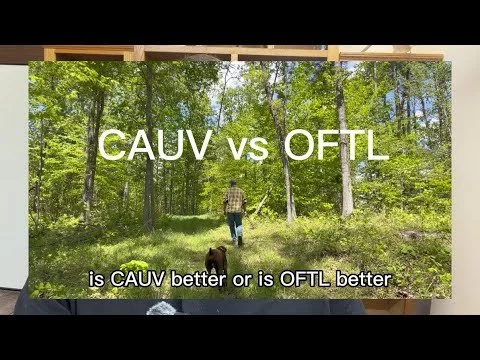
At a glance: CAUV often yields deeper savings, especially where CAUV values are low; OFTL offers a consistent 50% cut.
-
CAUV – Pros
✅ Often yields larger tax savings than OFTL, especially in counties where woodland CAUV is set at low values.
✅ Can be more flexible with management activities as long as the plan supports timber production.
✅ Administered locally by the county auditor with established application systems.CAUV – Cons
❌ Requires annual reapplication and continued compliance.
❌ If land use changes, you may owe recoupment penalties equal to the tax savings from the last three years.
❌ CAUV values can change with statewide reappraisals, which may affect tax savings over time.OFTL – Pros
✅ Offers a straightforward 50% tax reduction that is predictable and stable.
✅ No recoupment penalties if the property is removed from the program (unlike CAUV).
✅ Overseen by the ODNR Division of Forestry with regular service forester check-ins.OFTL – Cons
❌ Tax savings are capped at a 50% reduction — less than CAUV’s potential savings in many cases.
❌ Management plan and marked boundaries are mandatory, which adds steps before enrollment.
❌ Reinspection and ongoing compliance required to remain in good standing.Which One Should You Choose?
Choose CAUV if your woodland qualifies and you want maximum tax savings.
Choose OFTL if you want a simple, predictable 50% tax reduction and prefer a program with no recoupment penalty.
Both programs start with a professional forest management plan, which documents current conditions and outlines a schedule of practices that meet eligibility requirements.
Environmental Quality Incentives Program (EQIP)
The Environmental Quality Incentives Program (EQIP) is a voluntary federal conservation program administered by the USDA Natural Resources Conservation Service (NRCS). EQIP provides financial and technical assistance to private woodland owners who want to improve forest health, wildlife habitat, and overall land stewardship. Through cost-share payments, EQIP helps offset the cost of approved conservation practices on eligible properties.
For Ohio woodland owners, EQIP funding may be available for practices such as:
Timber Stand Improvement (TSI)
Crop Tree Release
Cull Tree Removal
Non-native Invasive Species Control
Tree and Shrub Planting
Forest Stand Improvement
Wildlife Habitat Enhancement
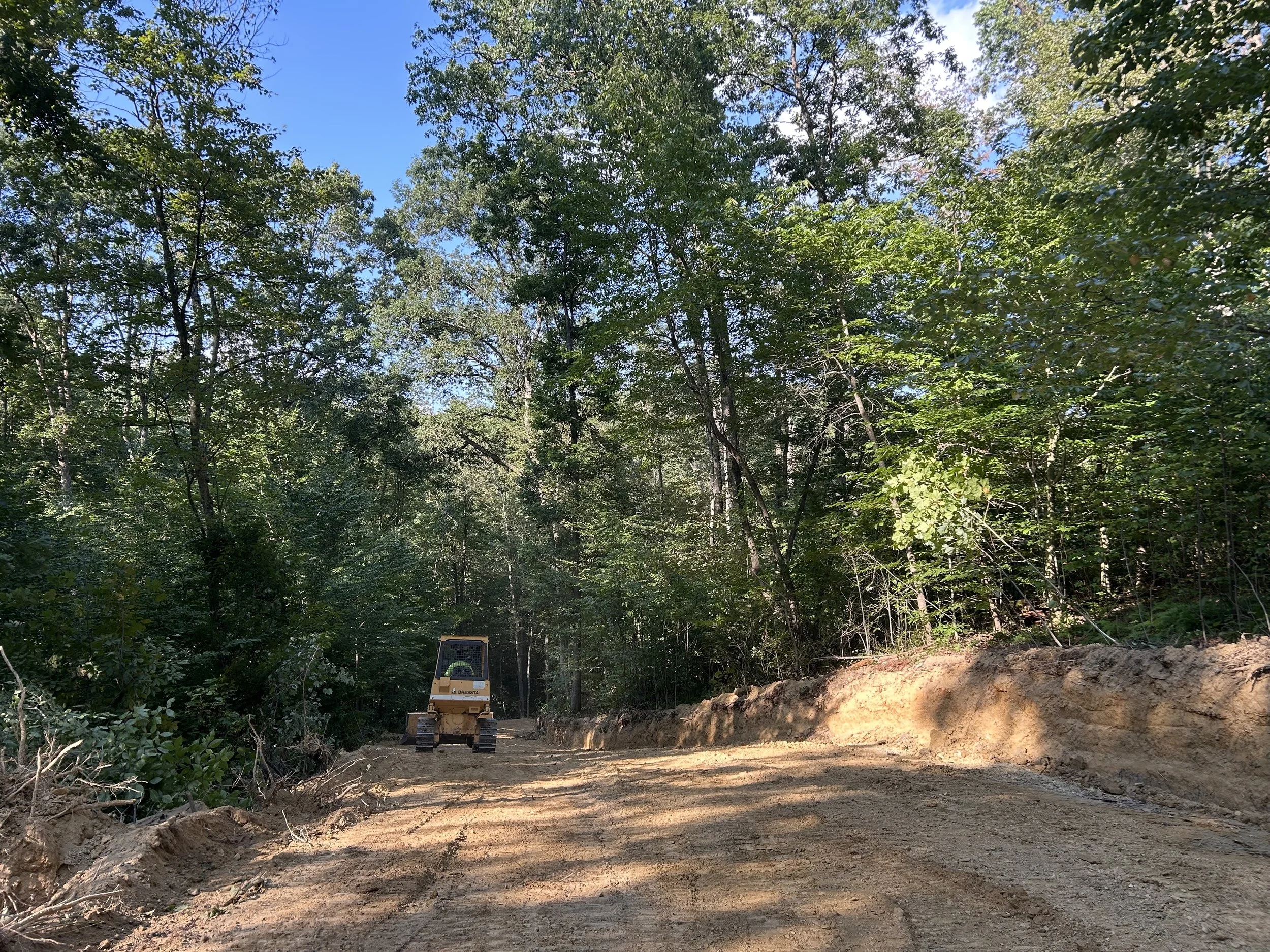
Forest Road and Access Improvements
Depending on the practice and funding pool, EQIP can cover a substantial portion of project costs, making meaningful forest management far more affordable.
-
Many landowners know their woods need work but delay projects due to cost. EQIP helps remove that barrier. By enrolling, woodland owners can:
Improve timber quality and long-term value
Enhance wildlife habitat and biodiversity
Control invasive species and improve forest health
Improve access and forest infrastructure
Protect soil and water resources
Receive financial assistance for practices that increase the productivity and sustainability of their land
EQIP allows you to actively manage your woodland without carrying the full financial burden yourself.
-
Woodland owners who meet the following criteria are eligible for EQIP:
Own or control private forest or agricultural land in need of conservation practices
Be in compliance with USDA eligibility requirements, including having no outstanding federal program violations
Be willing to implement approved conservation practices according to an NRCS-approved forest management plan
Landowners do not need to have prior experience with conservation programs to qualify—EQIP is designed to help owners improve their land sustainably while providing financial assistance.
-
Enrolling in EQIP is simple with guidance:
Contact your local NRCS office to express interest in EQIP and schedule an initial consultation.
Complete an application listing the conservation practices you want to implement.
Develop a forest management plan—Feicht Forestry can create a professional plan aligned with NRCS standards to ensure your practices qualify for funding.
Submit your application and plan to NRCS, which will rank applications based on environmental benefits and funding priorities.
If approved, sign a contract with NRCS to implement the practices. Payments are issued as projects are completed according to the plan.
-
Feicht Forestry guides woodland owners through every step of the EQIP process:
Develops a professional forest management plan that meets NRCS standards
Identifies eligible practices that align with your landowner goals
Assists with the application and submission process
Coordinates and implements approved projects
Ensures projects comply with NRCS specifications for payment
With Feicht Forestry, you can confidently take advantage of EQIP to improve your woodland while minimizing out-of-pocket costs.
Contact Feicht Forestry today to see how EQIP can help you fund important forest management projects.
Conservation Stewardship Program (CSP)
The Conservation Stewardship Program (CSP) is a voluntary program administered by the USDA Natural Resources Conservation Service (NRCS) that rewards private landowners for active, ongoing conservation on their property. Unlike programs that only cost-share individual projects, CSP supports a comprehensive, integrated approach to managing woodland, agricultural, and mixed-use land to improve soil, water, forest health, and wildlife habitat.
CSP provides financial incentives for maintaining existing conservation practices and implementing new ones that enhance long-term sustainability.
-
CSP can provide assistance for a wide variety of woodland practices, including:
Timber Stand Improvement (TSI) – thinning, pruning, and managing forests for healthier, high-quality trees
Crop Tree Release – freeing valuable trees from competition to improve growth and habitat value
Cull Tree Removal – eliminating undesirable trees to make space for quality timber and wildlife-friendly trees
Non-native Invasive Species Control – removing invasive plants to restore native vegetation
Tree and Shrub Planting – reforesting areas or enhancing cover and wildlife habitat
Wildlife Habitat Enhancements – creating snags, brush piles, or food plots
Forest Road and Trail Improvements – reducing erosion and improving access while protecting resources
Prescribed Fire or Vegetation Management – where approved, to maintain healthy forest ecosystems
CSP encourages bundling multiple practices and rewarding landowners for improving conservation outcomes across the property.
-
Woodland owners are eligible for CSP if they:
Own or control private forestland, woodland, or other eligible property
Have existing conservation practices in place or are willing to implement new ones
Are in compliance with USDA program requirements
Commit to managing their property according to a CSP conservation plan approved by NRCS
CSP is open to landowners of all property sizes, from small woodlots to larger tracts of forest.
-
Contact your local NRCS office to express interest in CSP and discuss your woodland management goals.
Schedule a site visit – NRCS staff will evaluate your property, review existing practices, and determine eligible improvements.
Develop a conservation plan – NRCS will create a plan identifying practices that qualify for CSP, including management schedules and expected environmental benefits.
Submit a CSP application through the NRCS office. Applications are ranked based on environmental benefits, conservation performance, and funding availability.
If approved, sign a CSP contract. Annual payments are provided based on verified implementation of approved practices over the contract period (usually five years).
-
Feicht Forestry assists woodland owners by:
Identifying eligible practices that improve forest health, wildlife habitat, and timber productivity
Coordinating and implementing approved practices efficiently and effectively
Ensuring that projects are completed to NRCS standards, helping landowners maximize program benefits
With Feicht Forestry’s support, CSP becomes a practical way to improve woodland, enhance habitat, and receive financial assistance for sustainable stewardship.
Contact Feicht Forestry today to see how CSP can help you improve your woodland while accessing cost-share funding.
Wildlife Habitat Initiative (WHI) – Ohio Division of Wildlife
The Wildlife Habitat Initiative (WHI) is a voluntary conservation program administered by the Ohio Department of Natural Resources (ODNR), Division of Wildlife. WHI provides financial cost-share assistance and technical support to private landowners who want to improve wildlife habitat on their land. The initiative focuses on enhancing habitat quality, increasing biodiversity, and supporting healthy wildlife populations across Ohio’s forests, fields, and wetlands.
WHI complements other conservation efforts by targeting habitat practices that benefit game and non-game species, while promoting sustainable land and forest stewardship.
-
WHI supports a variety of conservation practices that improve food, cover, shelter, and breeding habitat for wildlife. Woodland owners can receive cost-share assistance for practices such as:
Timber Stand Improvement (TSI) to open dense forest stands and improve structural diversity
Crop Tree Release to favor mast-producing or wildlife-preferred species
Non-native Invasive Species Control to restore native plant communities
Tree and Shrub Planting to expand cover, shelter, and food sources
Forest Edge & Brush Management to enhance habitat diversity and connectivity
Wildlife Food Plot Establishment to provide seasonal nutrition for deer, turkey, and small mammals
Nest Box & Habitat Structure Installation for birds, bats, and cavity-nesting species
Snag Creation & Downed Woody Habitat to support cavity nesters and small wildlife
WHI funding can cover a significant portion of project costs, making meaningful habitat improvements more affordable for landowners.
-
WHI emphasizes habitat practices that:
Support Ohio’s native wildlife, including game and non-game species
Enhance forest health and diversity
Improve structural complexity of woodlands
Restore or protect native vegetation
Increase connectivity between habitat patches
Provide quality food and shelter across seasons
The initiative is especially valuable in areas where habitat has been degraded by invasive species, limited vegetation diversity, or poor forest structure.
-
Woodland owners are eligible to participate in WHI if they:
Own or control private forestland or other natural habitats in Ohio
Are in compliance with federal and state conservation program requirements
Are willing to implement and maintain approved habitat practices
Control land that is not enrolled in conflicting programs or restricted from receiving cost-share funds
WHI is open to landowners of all woodland sizes, from small woodlots to larger forested tracts.
-
Contact your local ODNR Division of Wildlife habitat biologist or Ohio Division of Soil & Water Conservation office to express interest in WHI and schedule a site consultation.
Conduct a site assessment – A biologist or conservation professional will visit your woodland to discuss goals and suitable practices.
Develop a WHI habitat plan – Ohio wildlife professionals help create a plan that identifies practices, timelines, and expected wildlife benefits.
Submit your application – Work with the ODNR Division of Wildlife or local soil & water district to submit the plan and application for cost-share approval.
Implement approved practices – Once approved, cost-share funding is available as projects are completed and verified.
-
Although WHI planning and enrollment are coordinated through the ODNR Division of Wildlife or local conservation partners, Feicht Forestry offers valuable support by:
Advising on eligible WHI practices that align with your goals and forest conditions
Implementing approved practices such as TSI, crop tree release, invasive species control, tree planting, and brush management
Helping coordinate field work with your WHI plan requirements
Ensuring practices are completed to technical standards for lasting wildlife benefits
With professional assistance, WHI can become a practical and cost-effective way to improve your woodland for wildlife, enhance biodiversity, and support long-term stewardship.
Contact Feicht Forestry today to learn how WHI-funded practices can support your woodland, wildlife habitat goals, and forest health.